Phase 2: Prototype
Time to make ideas tangible.
Once I had selected the ideas to explore further, the next step was to turn them into something real. Prototyping allowed me to visualize the concept, share it with others, and gather feedback that helped refine the idea even more.
Mindset: Build to think.
I gathered cardboard and simple materials I had at home and spent one focused hour creating a rough prototype that captured the essence of the idea.
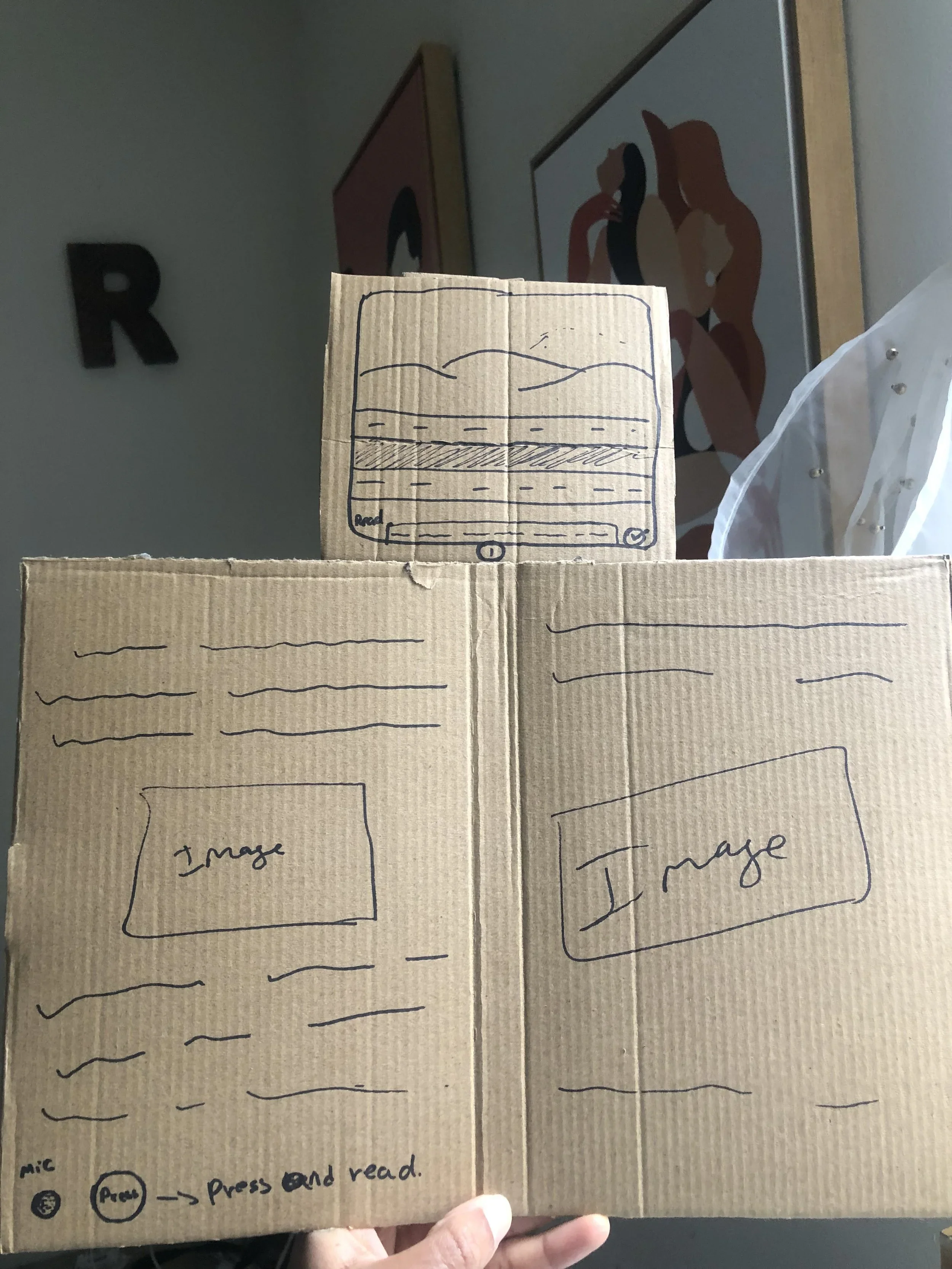
Prototype Concept
My initial concept was called Techno Read, an interactive reading tool that encourages kids to read aloud. As the child reads, the book would display an animation of the story on an attached screen. The idea also creates an opportunity for bonding between parents and children as they read together and watch the story come to life.
Step 2: Share the Prototype and Gather Feedback
I shared the prototype with my partner and walked him through the concept. I wanted to understand where the design might face challenges in terms of functionality, usability, and desirability. His feedback was insightful and immediately helped expand my thinking.
The first concern was weight. He asked if the book would be too heavy for children to carry if a screen were physically built into it. His second observation focused on flexibility and cost. Instead of embedding the device into a book, he suggested exploring ways to connect the book to a phone or tablet.
This led us to brainstorm a new version of the concept called Plug and Read, a tool that connects a book to any personal device. This eliminated the need for an installed screen and created a more affordable, adaptable solution.
Reflection
Prototyping revealed that the idea had promising potential and multiple directions it could grow. It highlighted the opportunity for kids to develop reading skills in a fun and interactive way while incorporating technology they already recognize.
I also became aware of new questions to investigate. How might we connect physical books to a device in a way that feels seamless and intuitive for kids? How might we support engagement while avoiding digital distractions? What format would offer the best experience, such as an app or a website?
The feedback allowed me to iterate on the concept and think more critically about usability, accessibility, and cost. Most importantly, it showed how valuable prototyping can be in shaping ideas and guiding the next phase of exploration.